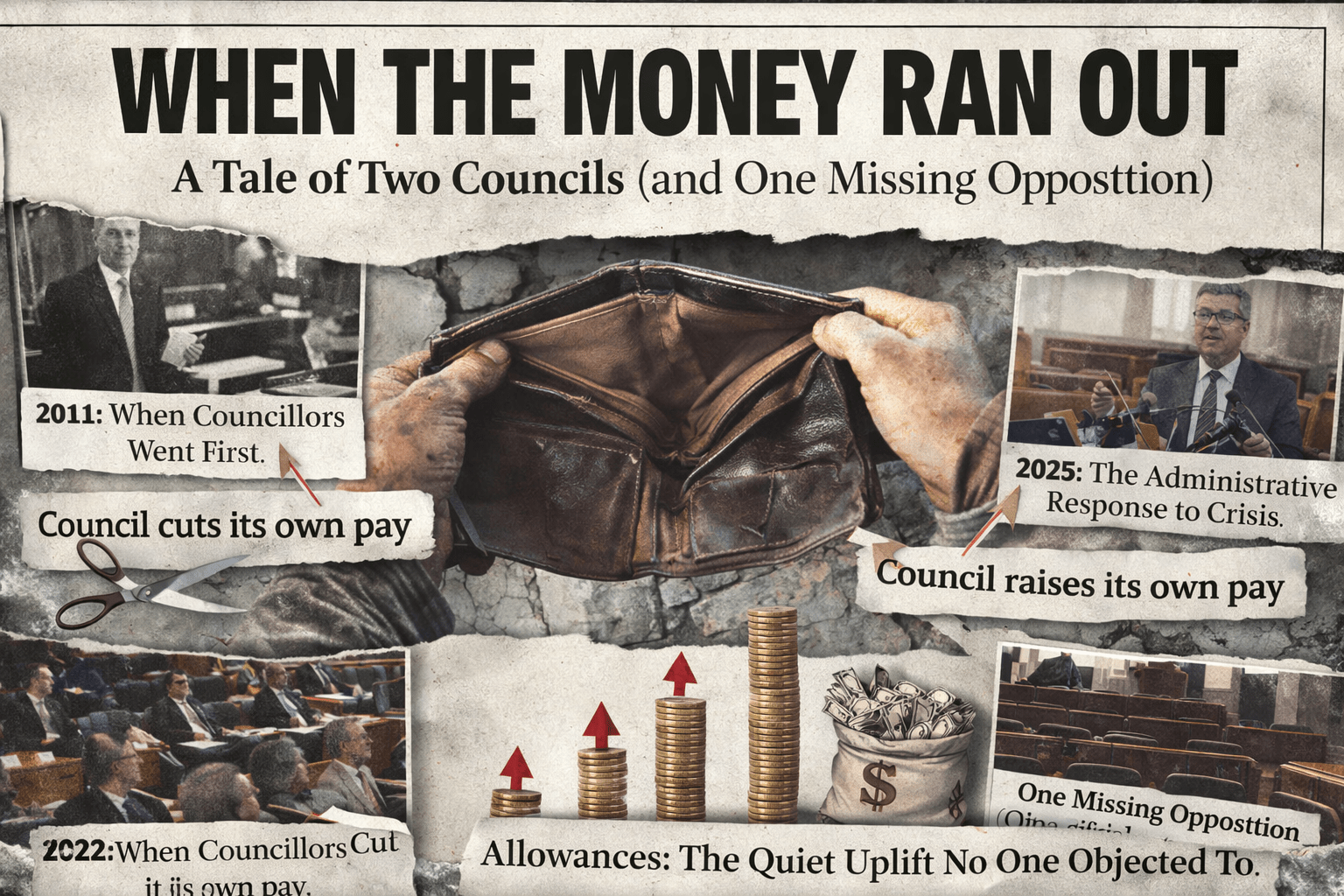
Now With Added Devolution, Fewer Services, and Even Less Memory
Local councils are, we are endlessly assured, champions of transparency. This is said often, confidently, and usually just after something significant has happened without anyone quite noticing.
Transparency, in the modern council sense, does not mean visibility. That would invite questions. Instead, it means that information exists somewhere, in a form that is technically public, structurally impenetrable, and safely detached from accountability.
To understand how we arrived here, a short history lesson is unavoidable.
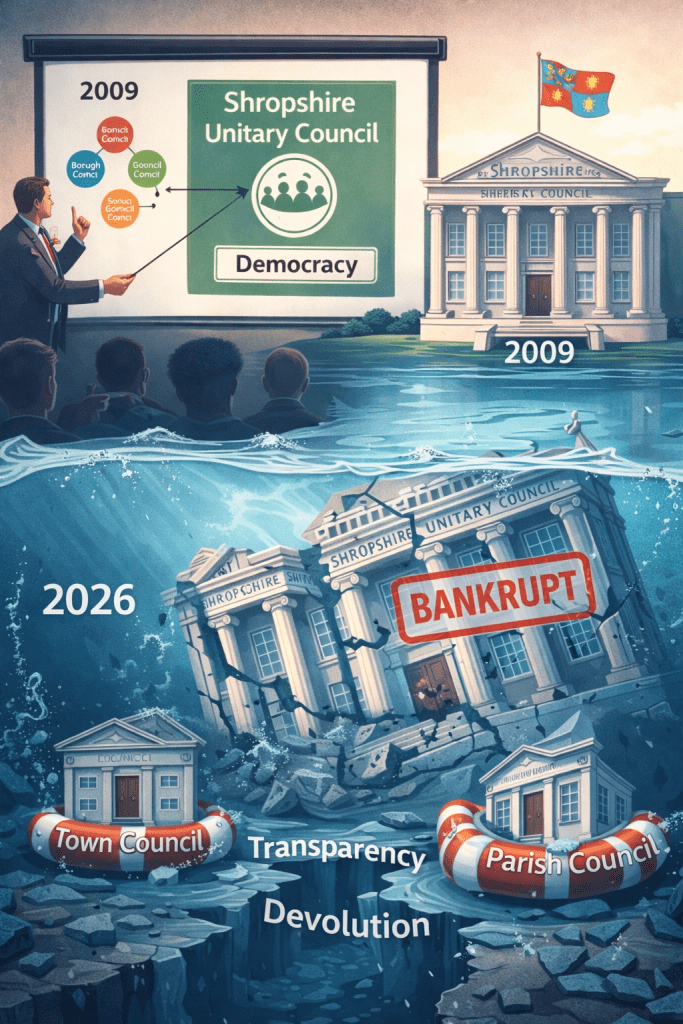
In 2009, Shropshire was governed by a collection of Borough Councils. This arrangement was deemed inefficient, old-fashioned, and insufficiently “strategic”. Someone, almost certainly an officer with a PowerPoint and a fondness for organisational charts, decided that democracy would work better if it were centralised.
Thus, Shropshire Council was born. One council to rule them all. Fewer layers. Clearer accountability. Stronger financial control. What could possibly go wrong?
Fast forward to 2026 and the results are in. The Unitary Council, having absorbed powers, assets, staff, and responsibility for everything that moved, is now hovering on the edge of bankruptcy. The solution, we are told, is devolution.
This is not the devolution people voted for, debated, or requested. This is the emergency version. Services are being handed down to town and parish councils at speed, under the reassuring banner of “local empowerment”, and with the subtle small print that funding is optional.
In other words, the same council that once insisted smaller authorities were inefficient is now urgently rediscovering their usefulness. Apparently, fragmentation is bad when things are going well and essential when they are not.
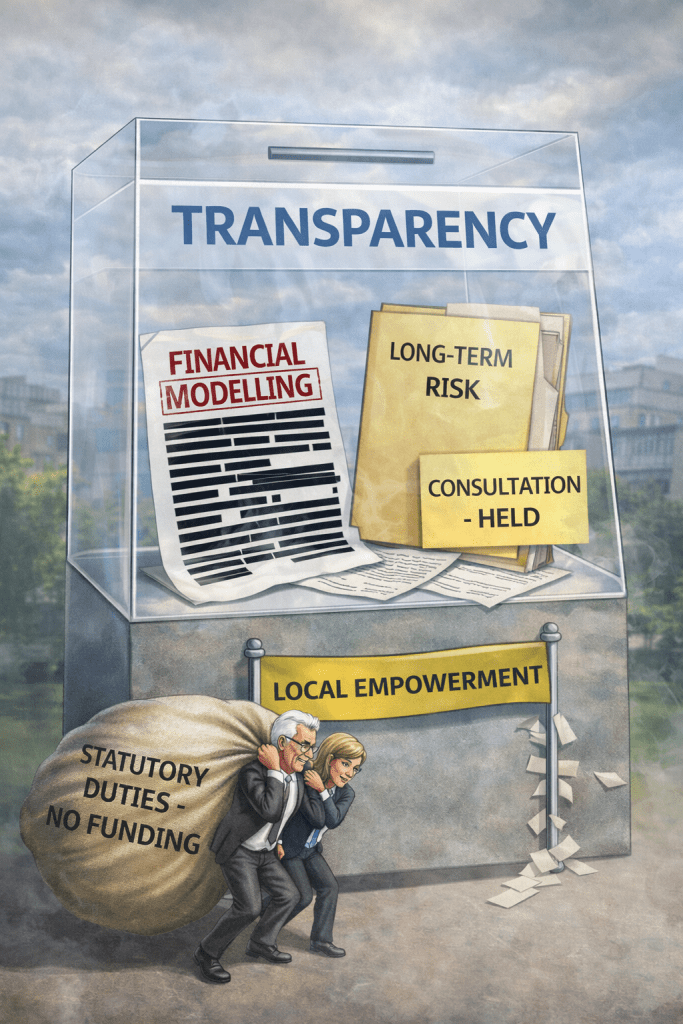
Transparency plays a vital role here. Decisions to devolve services are framed as inevitable, prudent, and collaborative. The financial modelling behind them is rarely visible. The long-term risks are confidently waved away. Consultation occurs just late enough to be inconvenient and just early enough to be technically compliant.
Council papers speak warmly of “opportunities for local democracy”. What they do not mention is that local councils are being invited to take on statutory duties without statutory funding, rising contractor costs without bargaining power, and public anger without the authority that caused it.
When residents ask questions, they are reminded that this is about resilience. When town councils hesitate, they are told that responsibility requires maturity. When precepts rise, everyone is encouraged to look downwards, never upwards.
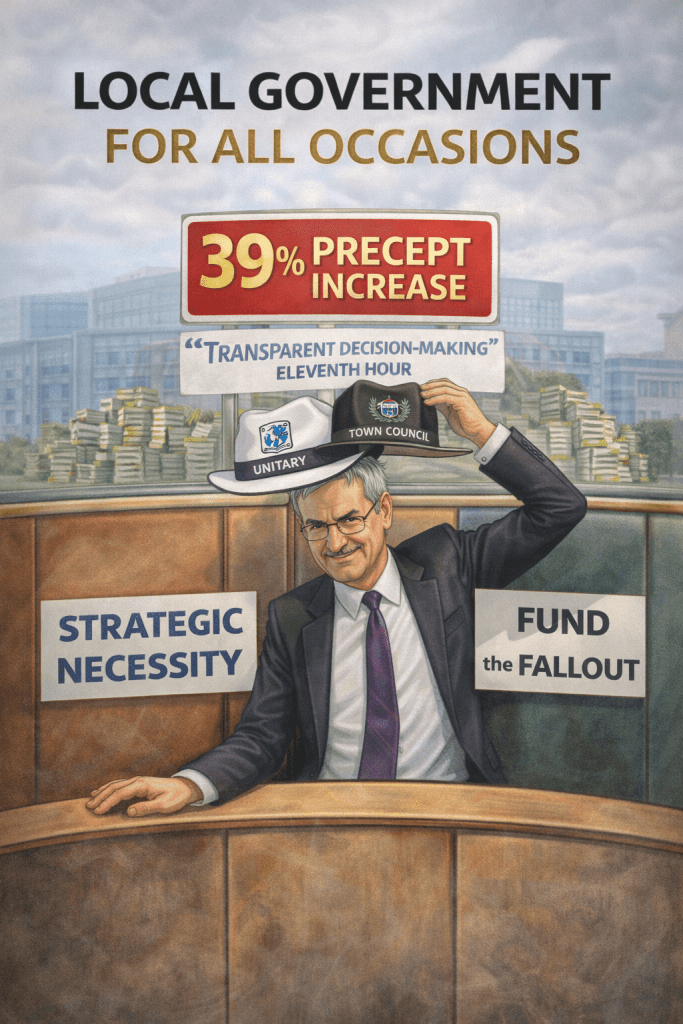
In Oswestry, residents are now facing a proposed precept increase of 39%. That is not administrative tidying. It is a substantial transfer of financial pressure. At the same time, some of the very councillors who sit on the Unitary authority shaping devolution policy also sit on the town council being asked to absorb it. In one chamber they speak of strategic necessity; in another they manage the consequences. When the same individuals help design the system and then vote to fund its fallout locally, the question is no longer abstract. It becomes unavoidable: which hat is accountable, and to whom? That tension — structural, democratic, and increasingly expensive — deserves closer scrutiny.
And so accountability completes its great migration. The officers who designed the Unitary model have mostly departed. The structure remains. The risk remains. The bill, conveniently, is now being forwarded elsewhere.
Council meetings continue, of course. Open to the public in the same way a locked room with a window is open. Agendas remain cryptic. Minutes remain anaemic. Difficult questions are acknowledged, noted, and gently escorted away from decisions already taken.
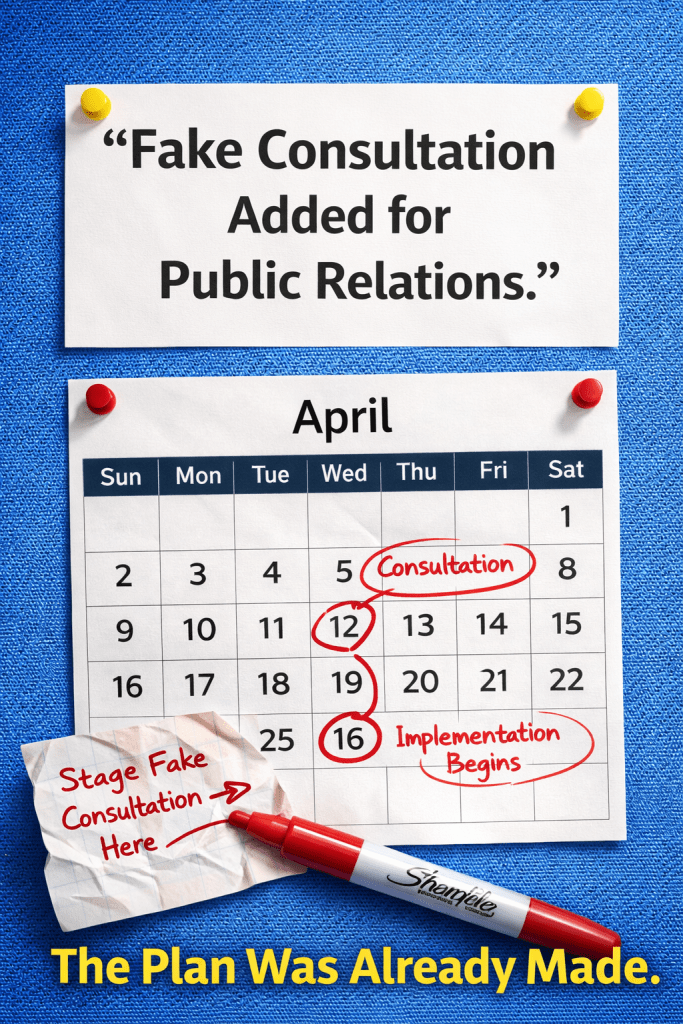
Freedom of Information requests still work, in theory. You ask how a decision was reached. You receive everything except the reasoning, the emails, and the moment where someone said “this might be a problem”.
And throughout all of this, the council maintains its unwavering commitment to transparency. Not the crude transparency of clarity and honesty, but the refined, modern version where nothing is hidden, yet nothing is explained.
This is not devolution. It is managed retreat. When a council centralises power in the good years and devolves risk in the bad ones, what it is practising is not democracy but institutional self-preservation. Transparency that stops at the moment responsibility becomes uncomfortable is not transparency at all. It’s just careful lighting.
What is happening now is not local democracy reborn. It is a council retreating from its own decisions and hoping no one notices who is being left holding the bill. Devolution without consent, funding, or honesty is not reform. It is abdication, politely redistributed.
The next blog will be on two-hatted Councillors – and what they take out of your Council Tax as Allowances.



 The Alternative Council
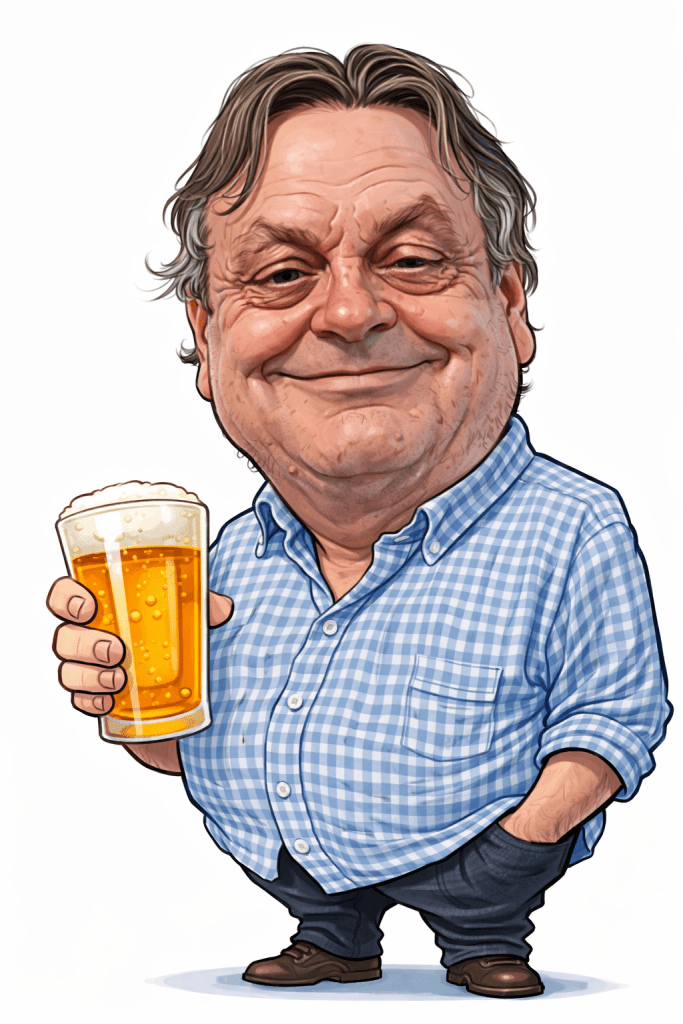
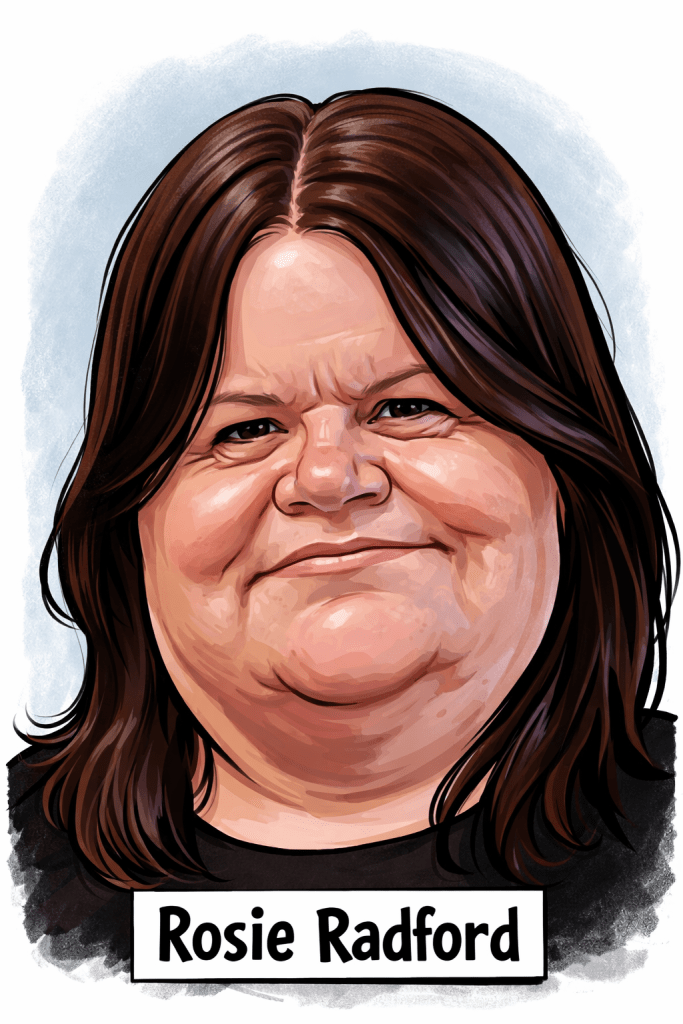
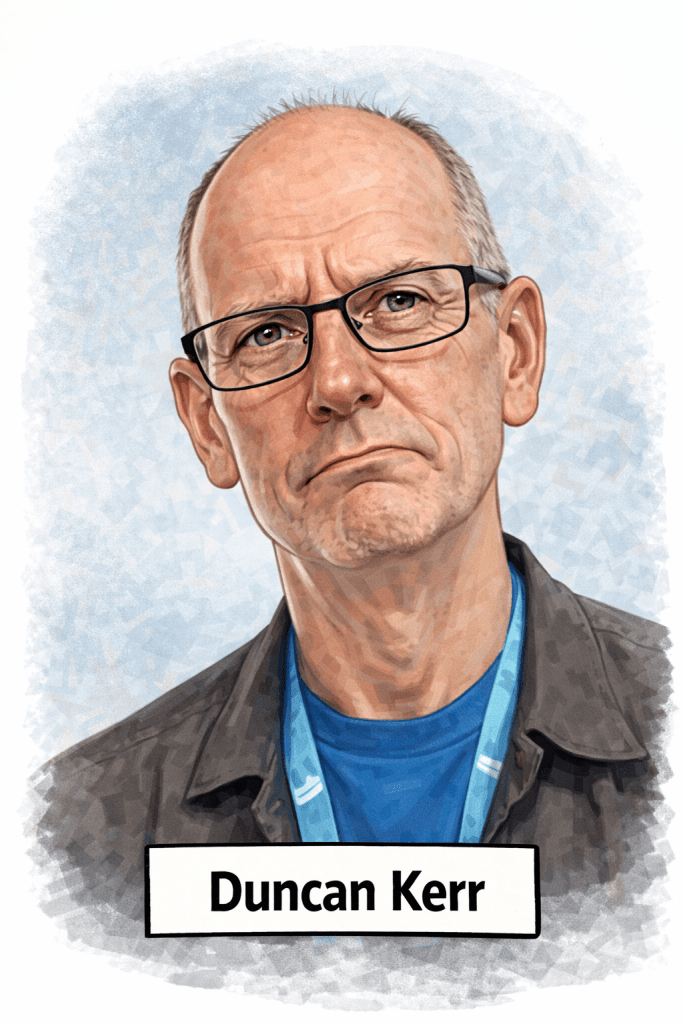
Love the drawing of the counsellors; it looks like the Owen family is a dynasty in Oswestry as James O is sited jabove a female member of the Owen family.
Text is spot on as well and with the various taxes and precepts about to go through the roof we Shropshire tax payers are in for a really tough time.
Happy days were had by all before the shopping centre debacle (overpriced Council purchase through a Jersey finance company!! and then its lower half demolished), North West Relief Road (I had a great row (almost fisticuffs) with a high ranking Highways Department official at one of the Council exhibitions), Pride Hill improvement? (late delivery and overpriced) Riverside hole in the ground which will often flood – Britain needs a new diving pit, so divers can train for the Olympics; new paving in Shrewsbury town centre which has worn out because too many people trod on the paving; upgraded road bridge south of Dorrington delayed by naughty badgers; Harley Bank protective gabions which had to be done twice. My fingers are getting tired – oh yes, we can’t forget that no double yellow lines were painted on the road outside Haughmond Hill at the same time as when the the road and banks were properly resurfaced and built – wait for the inevitable accident when either when some professional(?) dog walkers or mothers are unloading children, dogs, pram and mother-in-law because they didn’t want to pay the minimal parking fee to use the car park
Keep up the good work – we need someone to keep the windows open
LikeLike