
THE NIGHT OSWESTRY TOWN COUNCIL FORGOT ITS OWN HISTORY
There are council meetings that drift quietly into obscurity, preserved only in minutes nobody reads and archived somewhere between ‘apologies received’ and ‘any other business’.
And then there are meetings that accidentally reveal how power behaves when it assumes nobody important is watching.
The latest Oswestry Town Council meeting managed the latter with impressive efficiency.
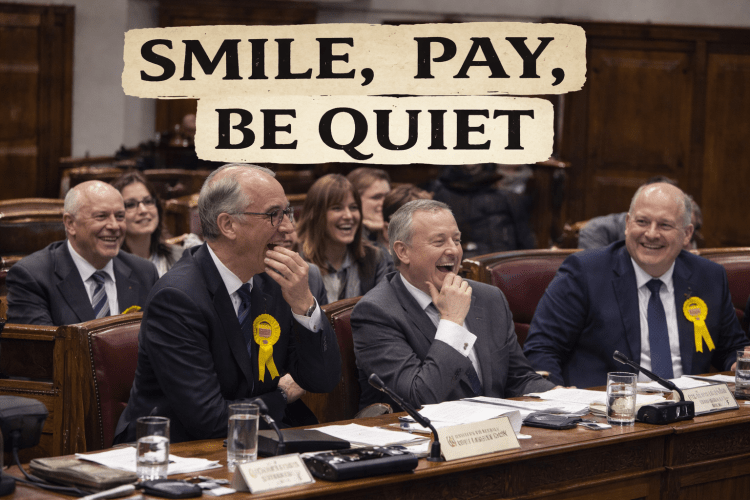
The subject matter was serious enough. Rising costs. A swelling precept. Residents being asked to pay more while responsibilities gently cascade down from Shropshire Council like an administrative avalanche nobody ordered.
What residents received instead of reassurance was a chamber that appeared increasingly irritated by the mere existence of scrutiny.
Former councillor Les Maguire felt compelled to halt his address after believing he was being mocked while speaking. Whether that was intention or tone hardly matters. When a speaker must stop proceedings to request basic respect, the council has already lost the argument it thinks it is winning.
Public participation is not meant to resemble an endurance test.
Councillor Jay Moore ultimately walked out, citing snide remarks and point‑scoring. Walkouts are not routine democratic housekeeping. They are what happens when debate feels decorative rather than meaningful.
Residents watching were left with a familiar impression: discussion was permitted, influence less so.
Councillor Goodlad was among those most vocal defending the council’s direction. Robust debate is healthy. But when volume begins to substitute for persuasion, governance starts to look suspiciously like a group project where one side already knows the final grade.
Mayor Councillor Rosie Radford faced the unenviable task of chairing proceedings as order gradually loosened its grip on the evening. Chairing requires authority as much as procedure. Once interruptions multiply and tempers rise, control becomes aspirational.

By the end, the meeting felt less chaired than survived.
And here the story becomes genuinely awkward.
Because on 14 June 2023, Councillor Les Maguire and former councillor Price proposed a Notice of Motion suggesting something dangerously radical: that council meetings be recorded and made publicly available for six years.
The motion argued recordings would improve accountability, accessibility, and public trust. A permanent record, available to residents, ensuring everyone could see decisions made in their name.
In short, transparency with an on‑switch.
The proposal was vehemently opposed by the Green majority of the time. Among those opposing was Councillor Jay Moore, long before his latest political reincarnation via the Liberal Democrats and into independence.
Politics, it seems, offers many opportunities for personal growth. Transparency less so.

The irony writes itself. A council that resisted recording meetings has now produced one that would have benefited enormously from a rewind button.
None of this is technically unlawful. Votes were taken. Procedures followed. Boxes ticked.
But democracy does not falter because rules are broken. It falters when behaviour convinces residents the outcome was settled before debate began.
Minutes will eventually appear online, carefully summarised and politely neutral. They will not capture tone. They will not capture reactions. They will certainly not capture the moment confidence quietly left the room.
Transparency is not a policy document. It is a culture.
And culture is revealed not when councillors agree, but when they are challenged.
Oswestry residents now face higher bills and expanding commitments while being assured everything remains under control.
After this meeting, however, a far simpler question remains:
If recording meetings was once considered unnecessary, and meetings now descend into arguments about conduct and respect, who exactly benefits from there being no permanent record?
Because transparency delayed has an unfortunate habit of looking very much like transparency avoided.
A serving town councillor owes a significant debt to a local business.
The interest keeps ticking.
Answers in the comments.
 The Alternative Council