
The Calm Voice at the Edge of the Cliff

There is a particular tone councils adopt when the numbers stop adding up.
It is not panic.
It is not honesty.
It is reassurance.
Shropshire Council’s Financial Strategy for 2026–31 is written in that tone. Calm. Managerial. Responsible. The kind of document that wants you to feel that adults are in the room, spreadsheets are under control, and nothing truly alarming is happening.
Which is curious, because the plan only works if the Government keeps lending the council money so it can meet its legal duty to set a budget.
Not to invest.
Not to improve services.
Just to remain lawful. This is not a strategy for recovery. It is a strategy for staying upright while the floor gives way.
Borrowing, now presented as a lifestyle choice

Once upon a time, borrowing was something councils did sparingly, for assets that delivered long-term value.
Now it is described as “supporting budget sustainability”.
Translated: we cannot make the numbers work without more debt.
The strategy quietly assumes further Exceptional Financial Support, otherwise known as borrowing from central government to plug day-to-day spending holes. This is framed as prudent financial management rather than what it actually is: dependence.
A council that needs permission to borrow in order to balance its books is not in control of its finances. It is negotiating survival.
Reserves: gone, but don’t dwell on that

Reserves have been run down. This is acknowledged, briefly, politely, and without any sense of consequence.
Reserves exist to absorb shocks.
They are now largely exhausted.
The shocks have not stopped.
Instead of asking whether this approach was wise, the strategy moves on briskly, like a host changing the subject after someone mentions the bill.
There is no plan to rebuild reserves at scale. There is simply an assumption that nothing truly catastrophic will happen.
This is not optimism. It is exposure.
Savings: the longest running work of fiction
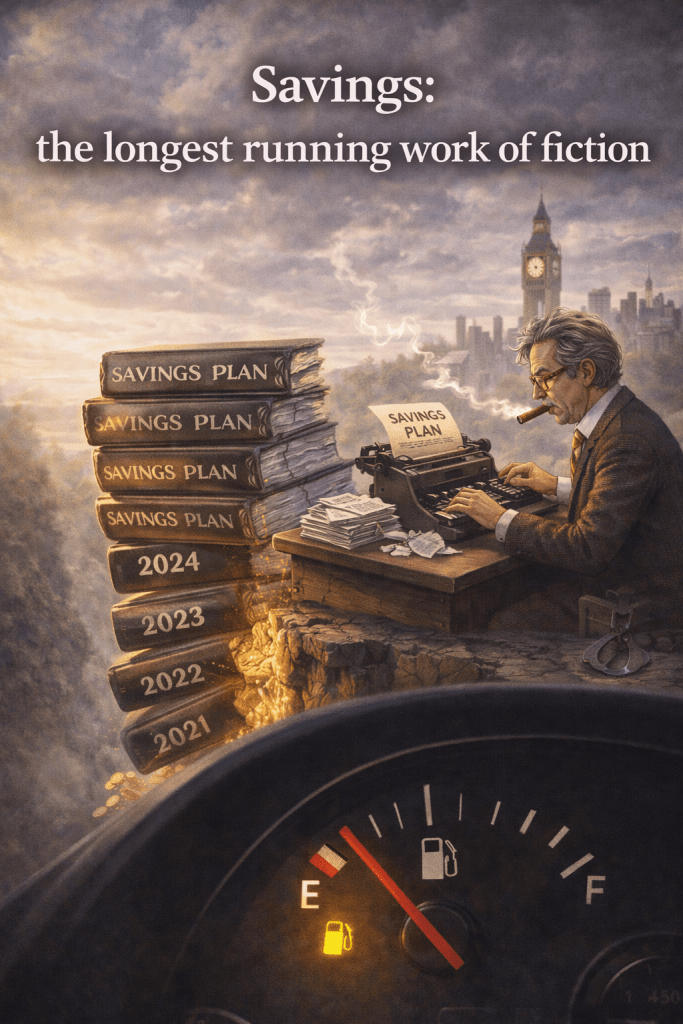
The document lists savings. It always does.
Some are delayed.
Some are reprofiled.
Some quietly fail and reappear later with new dates and gentler language.
This has been happening for years.
Savings that do not materialise are not savings. They are aspirations. When councils continue to base future plans on them, they are not managing risk. They are recycling hope.
Hope, notably, does not balance budgets.
Demand rises. The plan stays calm.
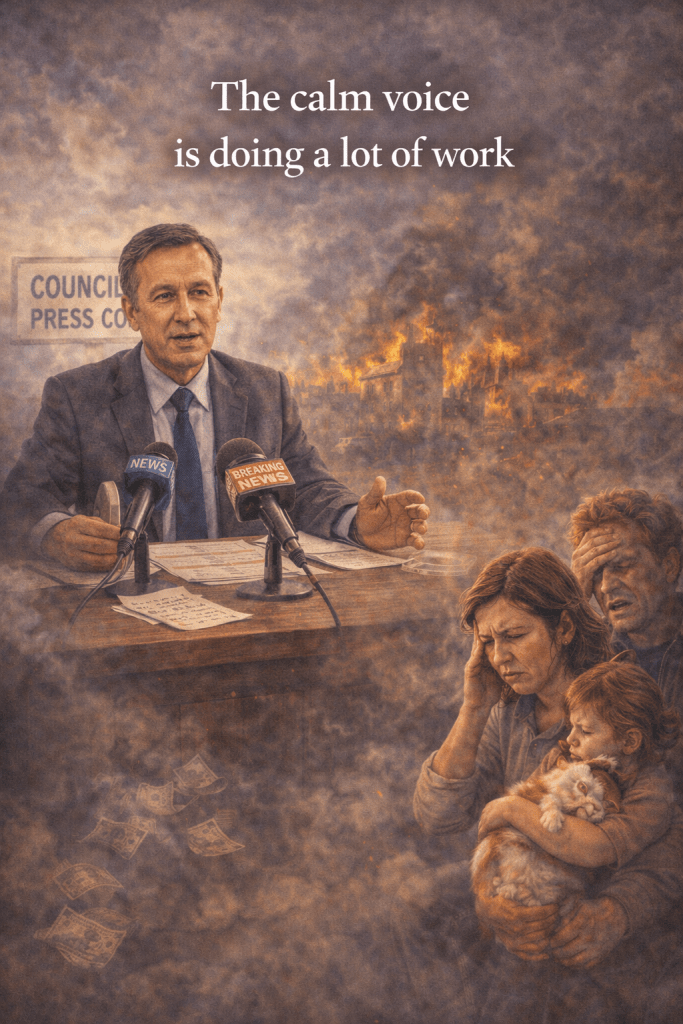
Adult social care demand rises.
Children’s services pressure rises.
Costs rise faster than funding.
All acknowledged. All described in neutral tones. All treated as background weather rather than structural failure.
At no point does the strategy pause to ask the obvious question:
What happens when the next pressure arrives and there is nothing left to absorb it?
The answer is not in the document. But the direction of travel is.
When councils run out of money, they don’t just cut services
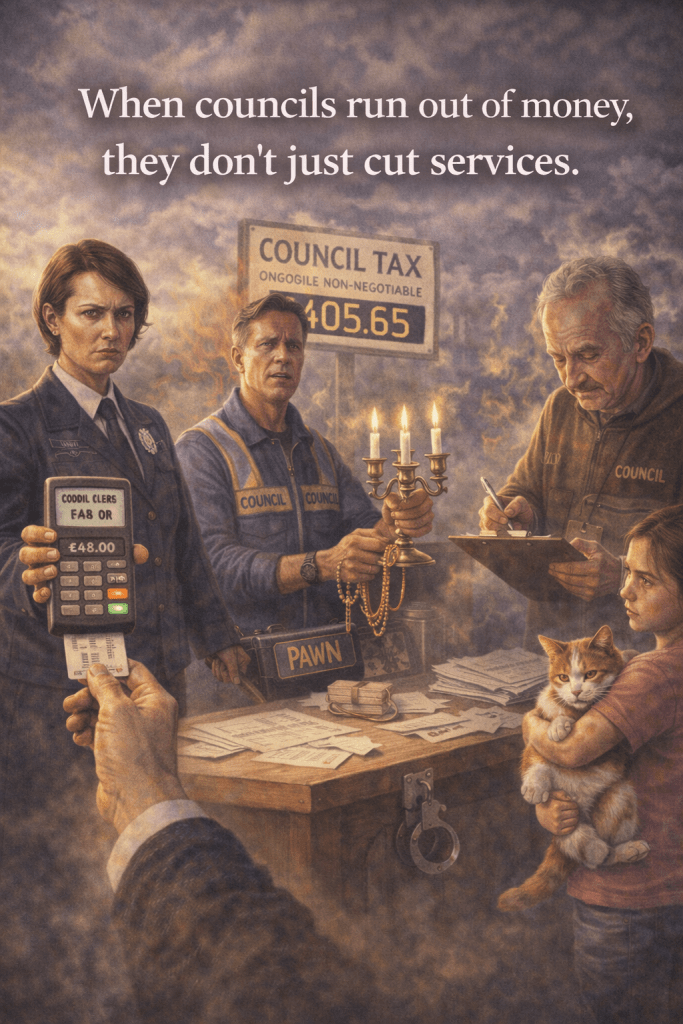
This is the part councils rarely explain openly.
When the centre cannot cope, responsibility moves outward.
To towns.
To parishes.
To communities.
Not with funding. With expectations.
This is how devolution quietly becomes off-loading.
This is how risk is transferred without consent.
This is how residents pay more locally for services they used to receive centrally.
None of this is spelled out in the strategy. But the financial shape makes it inevitable.
The calm voice is doing a lot of work
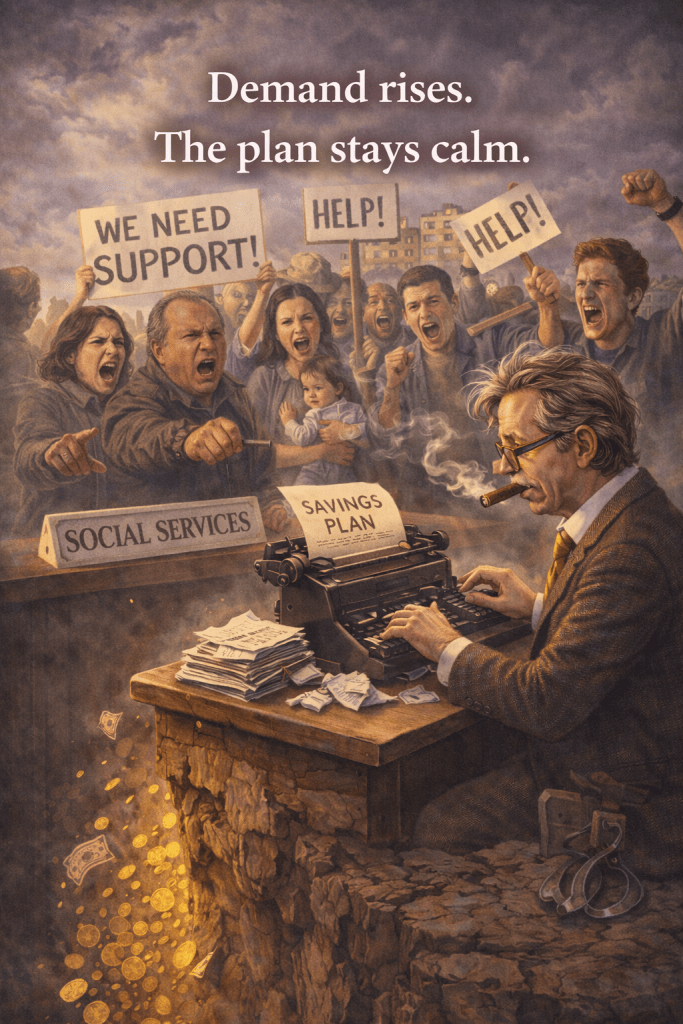
Nothing in this document shouts. That is deliberate.
It is designed to reassure councillors, soften scrutiny, and normalise the idea that borrowing to survive is simply the new normal.
But financial reality does not respond to tone.
The numbers are fragile.
The margins are gone.
The strategy relies on external permission and internal compliance.
This is not collapse.
It is something more British.
A managed drift towards the point where choices run out.
And when that happens, the record will remain.
 The Alternative Council
Too true about the comment concerning devolution of costs from the Shropshire (County) Council down to the town council (in my case, Shrewsbury T.C.). This will allow a full 4.9% rise in County Council rates with an increase in Town precept costs – Lovely (for them, not us)
LikeLike