
Transparency? Not under this council’s watch
It began, as all grand civic delusions do, with a glossy brochure, a slogan, and a promise too good to question. Cornovii was to be Shropshire Council’s redemption — a home-building miracle that would prove local government could outwit the private sector. What it became instead was a textbook on how to turn public service into private enterprise, and accountability into abstract art. They called it regeneration. History may call it something else: the moment transparency died of neglect.
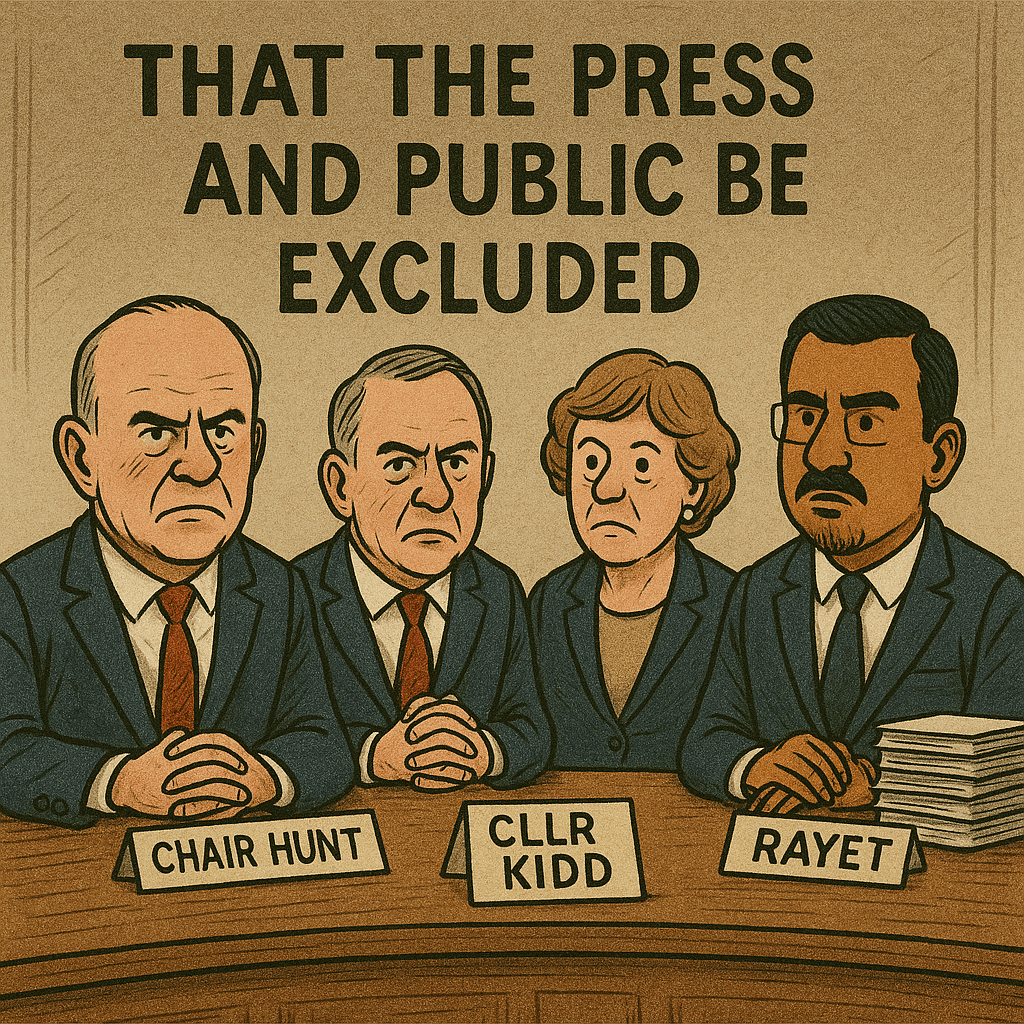
From the very start, secrecy wasn’t an accident. It was design. Each meeting of the Housing Supervisory Board opened with the now-famous phrase: “That the press and public be excluded.” And excluded they were. Behind the closed doors sat a cast both familiar and comfortably unaccountable: Cllr Vince Hunt in the chair; Cllr Robert Macey and Cllr Dean Carroll, the political midwives of the scheme; Cllr Heather Kidd, the polite opposition who now leads the council she once pretended to scrutinise; and a supporting ensemble of officers led by James Walton (Section 151 Officer, keeper of the loans) and Harpreet Rayet, the man who somehow managed to be developer, landlord, and regulator all in one salary.
Cornovii was supposed to deliver 1,000 homes and a profit. Instead, it delivered redacted reports, late audits, and a mystery about where the money actually went. When the questions began — five separate Freedom of Information requests, each seeking the same basic facts — the council replied with nothing but silence and the bureaucrat’s favourite prayer: “Commercial sensitivity.” One could almost hear the shredders warming up.
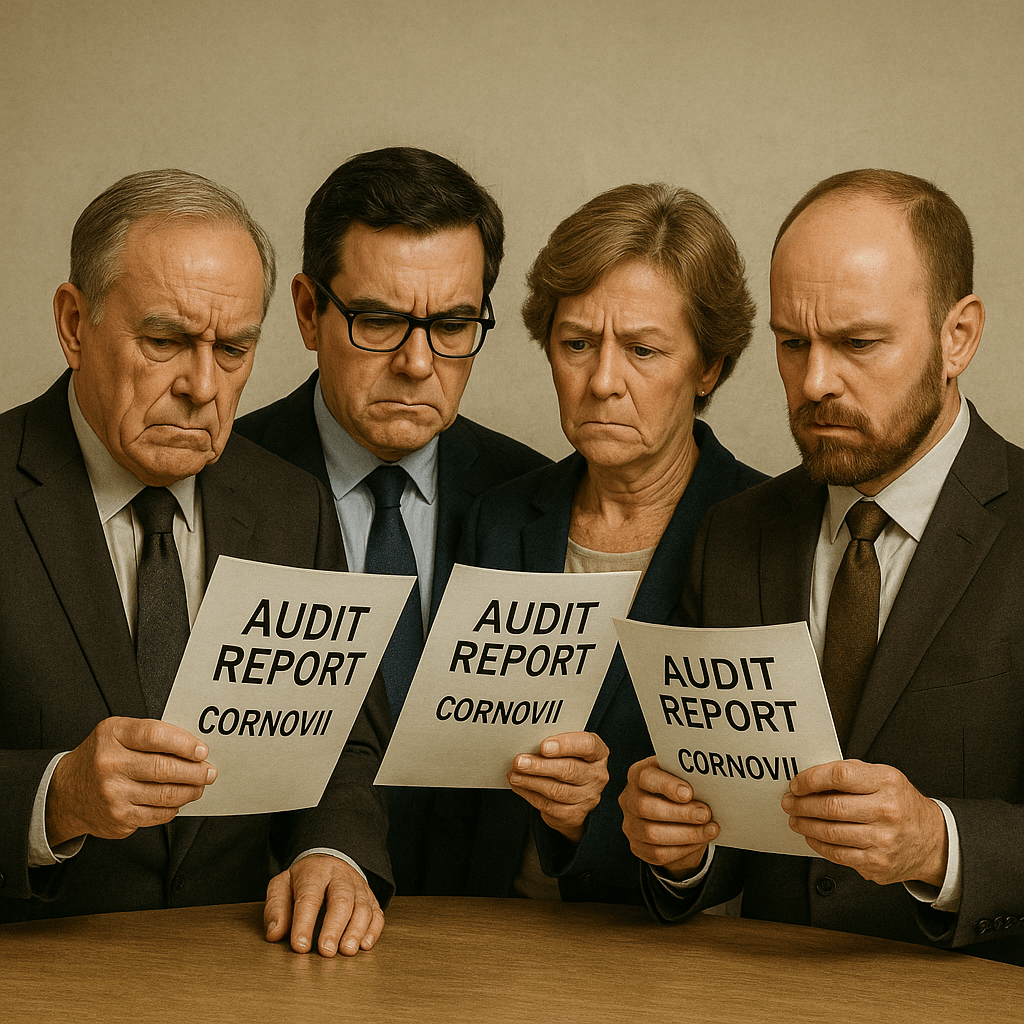
The loan book grew fat while the houses appeared thin. Cabinet papers show “restated” agreements, a phrase that belongs to the same lexicon as “adjusted expectations” and “financial irregularities.” Even the auditors have begun to squint at the numbers. By 2023, every Cornovii update had vanished into the Exempt Items section of the agenda — the civic equivalent of a locked drawer labelled “Do Not Ask.”
Then came the exodus. Mark Barrow, Director of Place and architect of the Cornovii concept, resigned abruptly in December 2024. Andy Begley, Chief Executive, followed soon after, leaving only a trail of press releases about “new opportunities” and “exciting challenges ahead” — council-speak for “before the auditors arrive.” In their wake, the empire remained under Rayet’s command, a one-man triangle of control linking Cornovii Developments, Cornovii Investments (Shropshire) Ltd, and STAR Housing. The phrase arm’s length took on a new meaning: the exact length of Harpreet Rayet’s own arm.
At this point, the line between mismanagement and misconduct starts to blur. False accounting under the Fraud Act 2006 doesn’t require money to vanish — merely that figures are presented dishonestly to secure gain or avoid loss. Concealing financial exposure from the public purse may yet meet that test. Likewise, the persistent refusal to release information paid for by taxpayers could drift dangerously close to misfeasance in public office: the deliberate abuse of position to frustrate accountability.
The most telling evidence lies not in what was published but in what was not. The FOIs, submitted in sequence, asked only for transparency around loans, board minutes, and director relationships. Not a single response contained the requested substance. Some were delayed beyond the statutory twenty working days; others were dismissed outright. The council has turned the Freedom of Information Act into a hostage note written in bureaucratese: “We have your answers, but you will never see them.”
Meanwhile, the homes Cornovii was meant to build remain slow to sell, and the council loans — still unpaid — sit buried in appendices marked “exempt”. Even the Cabinet Member for Housing, Cllr James Owen, has been drawn into the farce, promising to chase overdue responses while his own name appears among STAR Housing’s directors. Shropshire’s housing policy, it seems, has become a full-time employment scheme for circular responsibility.
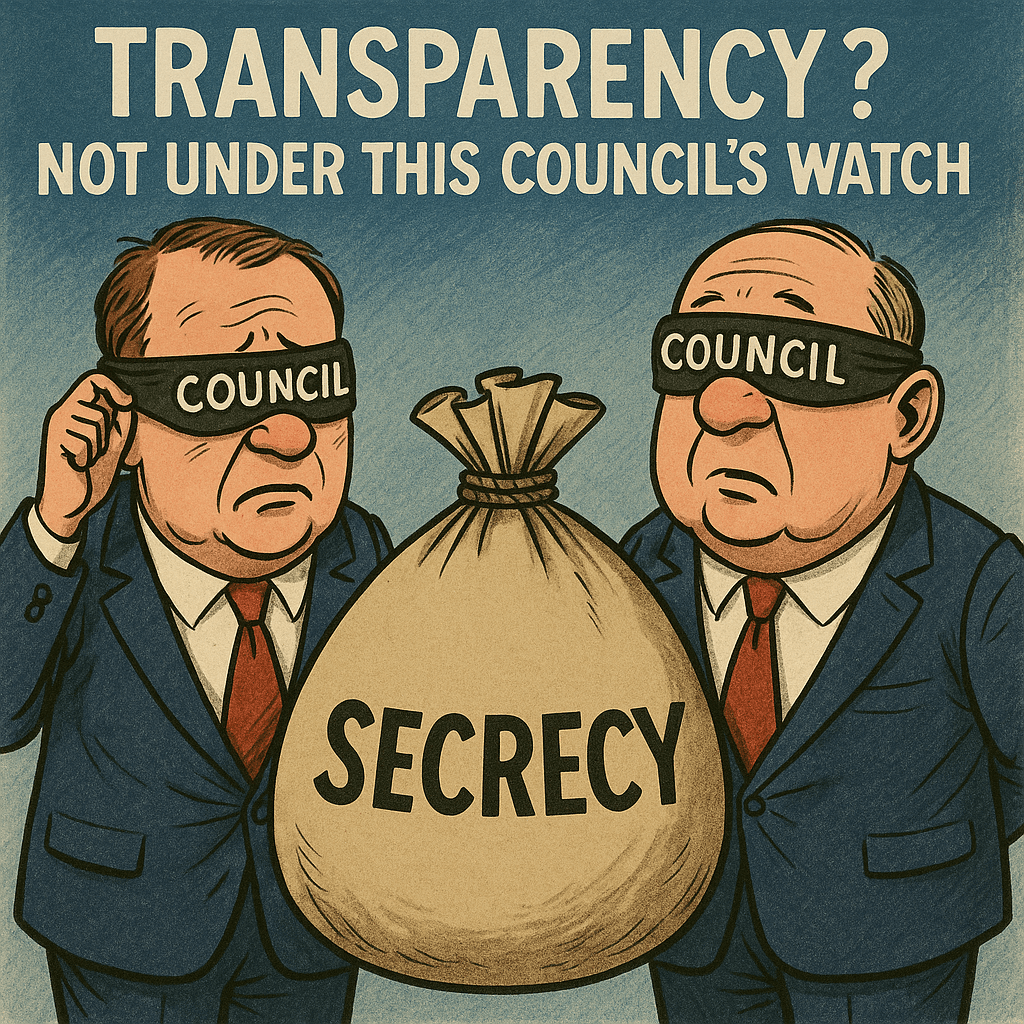
In the corridors of Shropshire Council headquarters, they will say everything is fine, that this is all perfectly normal commercial practice. They said the same about IP&E Ltd once. And yet the pattern is unmistakable: secrecy defended as prudence, conflict dressed up as competence, and oversight replaced by auto-approval.
So here we stand, seven years on from Cornovii’s birth, staring at a company that cannot answer a straight question and a council that will not ask one. Millions have been loaned; houses remain unsold; directors multiply like paperwork. The architects have fled, the curtain is drawn, and the lights burn on in empty offices.
The doors are still closed. The money is still flowing. And the silence, at Shropshire Council’s most expensive development, is finally beginning to sound like guilt.
This, then, is the consequence of a toxic mix of naivety, incompetence, and egotism — a council that mistook secrecy for strategy and self-belief for success, until the truth began knocking at the door they had locked from the inside. And this is the fundamental flaw in a municipality that confuses accountability with inconvenience, and silence with strength.
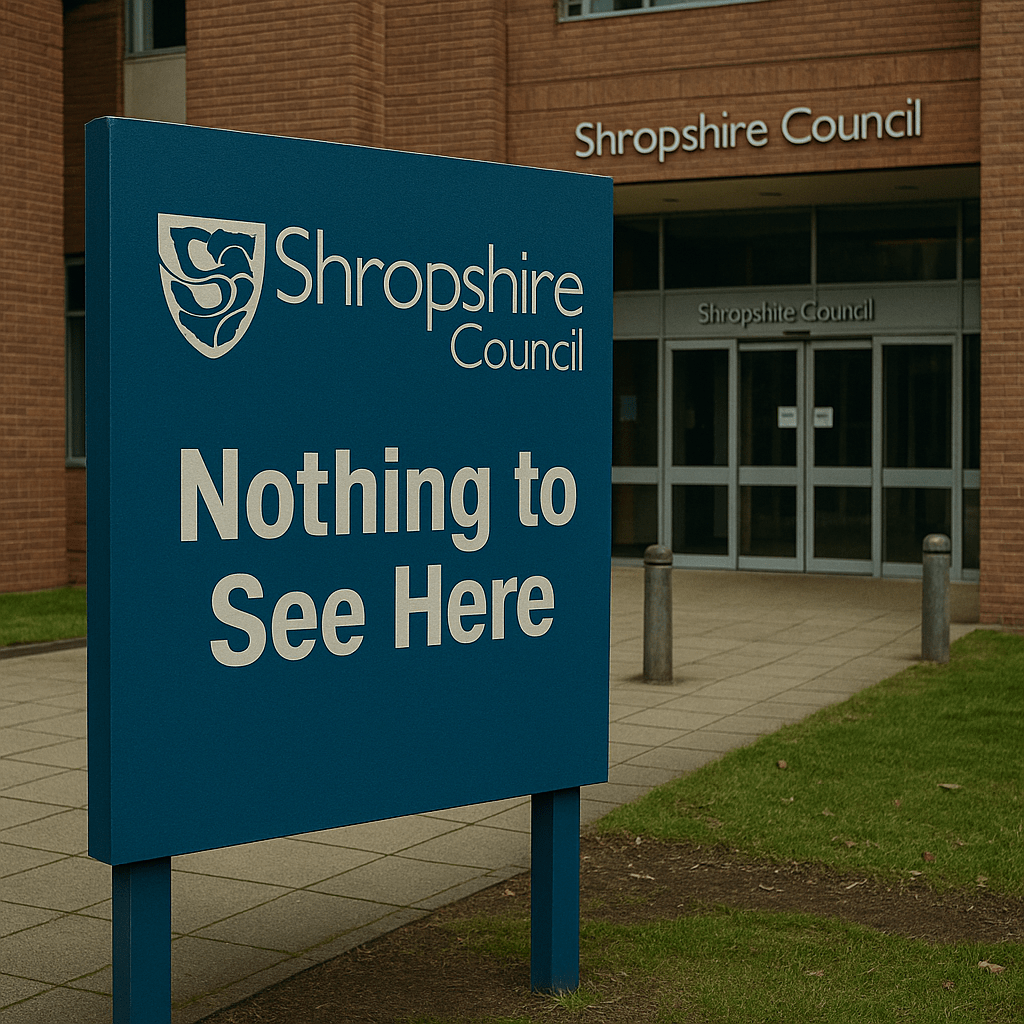
And still no response to the five Freedom of Information requests.
 The Alternative Council